Ford 6.7 Power Stroke CP4.2 Failure: Prevention Kits & DCR Conversions Explained
Why the 6.7 Power Stroke CP4.2 pump grenades, how to protect against it, and the real fixes — disaster-prevention kits, DCR pump conversions, filtration upgrades, and used/OEM options — for 2011-2024 Ford Super Duty diesels.
Parts Covered in This Guide — At a Glance
Reliable fueling at stock or elevated power
Reliable fueling at stock or elevated power
Reliable fueling at stock or elevated power
Reliable fueling at stock or elevated power
Reliable fueling at stock or elevated power
| # | Product | Owner Reviews | Availability | Best For | |
|---|---|---|---|---|---|
| 1 | 576 | $400.00 In Stock at Amazon | Reliable fueling at stock or elevated power | ||
| 2 | 14 | $95.99 In Stock at Amazon | Reliable fueling at stock or elevated power | ||
| 3 | 192 | $2400.00 In Stock at Amazon | Reliable fueling at stock or elevated power | ||
| 4 | 596 | $99.99 In Stock at Amazon | Reliable fueling at stock or elevated power | ||
| 5 | 330 | $49.99 In Stock at Amazon | Reliable fueling at stock or elevated power |
If you own a 2011-2022 Ford 6.7L Power Stroke, the Bosch CP4.2 high-pressure injection pump is the single component most worth understanding. When it fails, it rarely fails alone — and the repair bill separates a bad day from a catastrophic one. This guide explains why the CP4.2 grenades, the three real ways owners deal with it, and where to buy the parts new (Amazon) or used/OEM (eBay Motors).
Why the CP4.2 Is a Known Weak Point
The CP4.2 pressurizes fuel to the extreme levels a modern common-rail 6.7 needs. Its weakness is lubrication: the pump relies on diesel itself to lubricate its internal roller lifters, and North American diesel runs drier (lower lubricity) than the fuel these Bosch pumps were designed around. Starve one lifter and it can gall, seize, and start machining itself.
The real damage is what happens next. That fine metal debris doesn’t stay in the pump — it’s carried downstream through the high-pressure rails, lines, and into every injector (see the Power Stroke injector guide for how the 6.7’s common-rail injectors work and fail). A failure that starts as one worn part cascades into a contaminated high-pressure fuel system. That’s the “CP4 disaster” owners talk about, and it’s why prevention is such a popular topic on the 6.7.
Not every truck fails, and many go hundreds of thousands of miles untouched. But the failure is expensive enough that protecting against it is cheap insurance — especially if you tow heavy, run a tuner, or plan to keep the truck a long time.
Path 1: Disaster-Prevention (Bypass) Kits
The most common first move is a CP4 disaster-prevention kit. It installs a fitting and bypass line so that if the pump ever fails, the metal debris and fuel are routed to the return instead of pushed into the injectors. The pump can still die — but the failure stays contained to the pump rather than taking out the rails and all eight injectors.
This is the lowest-cost, most popular insurance for a stock or lightly-modified 6.7. Kits like the S&S Diesel Gen2.1 CP4.2 Disaster Prevention Kit are purpose-built for the 2011-2022 Super Duty. See the fuel-system category for current options, and check the recommended parts below.
Path 2: DCR / CP3-Style Pump Conversion
The most thorough fix removes the CP4.2 entirely. A DCR conversion swaps in a more robust, better-lubricated pump using a conversion kit — eliminating the failure mode instead of just containing it. It’s a bigger install and a bigger spend than a bypass kit, but for high-mileage trucks, work trucks, and owners who never want to think about the CP4 again, it’s the definitive answer.
The S&S Diesel CP4-to-DCR Pump Conversion is built for 2011+ Ford applications. Used and OEM pumps for either path show up regularly on eBay Motors — use the buttons above.
Path 3: Filtration, Fuel Quality, and Supply
Whichever path you take, the cheapest protection is clean, well-supplied fuel. The CP4.2 hates air, water, and debris, so upgraded filtration matters:
- Better fuel filters — quality 6.7 filters and water separation keep contaminants away from the pump. Doc’s Diesel and similar OEM-spec filters are a routine service upgrade.
- Filter conversion kits — add a second filtration stage or an easier-service setup on the 2011-2024 trucks.
- An aftermarket lift pump — a FASS/AirDog-style pump adds filtration and holds steady supply pressure, taking stress off the injection pump. That’s covered in depth in our best fuel-system upgrades ranking.
None of this replaces a bypass kit or conversion, but paired with one it’s the complete defense.
Which Path Should You Choose?
- Stock/daily-driven 6.7, keeping it a few years: a disaster-prevention kit plus good filtration is the sweet spot.
- High-mileage, heavy tow rig, or you want it gone for good: a DCR/CP3-style conversion.
- Every truck: stay on top of filtration and fuel quality — it’s the cheapest line of defense.
New to the 6.7 platform, or cross-shopping generations? Our 6.7 vs 7.3 Power Stroke guide covers how the modern common-rail trucks differ from the legendary 7.3. Building for power on top of a protected fuel system? Pair this with the turbo upgrade guide.
Where to Buy
- Prevention kits, DCR conversions, filters, and filtration upgrades: Amazon Automotive — see the fuel-system category and the recommended parts below.
- Used and OEM CP4.2 pumps, DCR kits, and injectors: eBay Motors, using the buttons above — listing prices are set live by the seller.
Shopping used or OEM? Try eBay Motors
Live listings for the parts covered in this guide — prices set by the seller.
Recommended Parts for This Guide

S&S Diesel Motorsport® Gen2.1 CP4.2 Disaster Prevention Kit Compatible with 2011+ 6.7 Powerstroke (CP4-6.7F-BP-G2.1)
576 owner reviews
S&S Diesel Motorsport® Gen2.1 CP4.2 Disaster Prevention Kit Compatible with 2011+ 6.7 Powerstroke (CP4-6.7F-BP-G2.1). Fuel-system hardware to keep the Power Stroke fed reliably at stock and elevated power.
- Reliable fuel delivery
- Supports higher power

CP4 Disaster Prevention Kit - Compatible with 2011-2022 Ford F-250 F-350 F-450 F-550 6.7L Powerstroke Diesel - Part #CP4-6.7F-BP-G2.1. | 2011-2025 Ford
14 owner reviews
CP4 Disaster Prevention Kit - Compatible with 2011-2022 Ford F-250 F-350 F-450 F-550 6.7L Powerstroke Diesel - Part #CP4-6.7F-BP-G2.1.. Fuel-system hardware to keep the Power Stroke fed reliably at stock and elevated power.
- Reliable fuel delivery
- Supports higher power
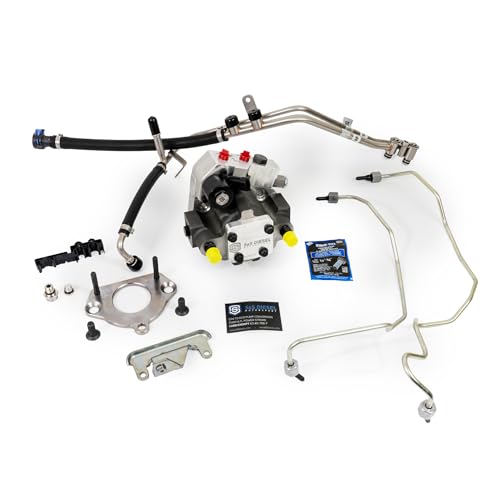
S&S Diesel Motorsport® CP4 to DCR Pump Conversion Compatible with 2011+ Ford 6.7 Powerstroke Diesel (6.7F-DCR-1)
192 owner reviews
S&S Diesel Motorsport® CP4 to DCR Pump Conversion Compatible with 2011+ Ford 6.7 Powerstroke Diesel (6.7F-DCR-1). Fuel-system hardware to keep the Power Stroke fed reliably at stock and elevated power.
- Reliable fuel delivery
- Supports higher power

Sinister Diesel Blue Spring Kit with Billet Spring Housing - Fuel Regulator Kit - 2003-2007 Ford Blue Spring Kit 6.0 Powerstroke – Fast Install – Replace OE # 3C3Z-9T517-AG 3C3Z9T517AG
596 owner reviews
Sinister Diesel Blue Spring Kit with Billet Spring Housing - Fuel Regulator Kit - 2003-2007 Ford Blue Spring Kit 6.0 Powerstroke – Fast Install – Replace OE # 3C3Z-9T517-AG 3C3Z9T517AG. Fuel-system hardware to keep the Power Stroke fed reliably at stock and elevated power.
- Reliable fuel delivery
- Supports higher power

Doc's Diesel Fuel Filter, Fits 6.7L Powerstroke Ford F-250 F-350 2011-2016 | Independent Testing Rates It At 98.84 Percent Efficiency Down To 3 Microns
330 owner reviews
Doc's Diesel Fuel Filter DFD4615 | Compatible with Ford 6.7L Powerstroke F250, F350, F450, F550 2011-2016 | Replaces FD4615. Fuel-system hardware to keep the Power Stroke fed reliably at stock and elevated power.
- Reliable fuel delivery
- Supports higher power

Doc's Diesel Fuel Filter DFD4625 | Compatible with Ford 6.7L Powerstroke F250, F350, F450 2017+ | Replaces FD4625
634 owner reviews
Doc's Diesel Fuel Filter DFD4625 | Compatible with Ford 6.7L Powerstroke F250, F350, F450 2017+ | Replaces FD4625. Fuel-system hardware to keep the Power Stroke fed reliably at stock and elevated power.
- Reliable fuel delivery
- Supports higher power
Frequently Asked Questions
Which Ford Power Stroke trucks have the CP4.2 pump?
What actually happens when a CP4.2 fails?
Do disaster-prevention kits actually work?
What's a DCR conversion?
Does fuel quality or a lift pump matter for CP4 survival?
Keep going
Shop the parts in this guide
- Injectors for the Power Stroke Fuel injectors, injector sets, and injector hardware for the 7.3, 6.0, and 6.7 Power Stroke — stock replacements through high-flow performance injectors for higher horsepower diesel builds.
- Fuel System for the Power Stroke Lift pumps, CP4 and high-pressure fuel pumps, fuel rails, lines, regulators, and fuel-system kits that feed the Power Stroke reliably at stock and elevated power.