Ford Super Duty Power Stroke Generations & Fitment Guide (1999–2024+)
Every Ford Super Duty generation mapped to its Power Stroke diesel — 7.3, 6.0, 6.4, and 6.7 by model year — so you can identify your truck and buy the right parts the first time. Body generations, engine changes, and the known weak points that drive part choices.
Parts Covered in This Guide — At a Glance
Ford Power Stroke owners
Ford Power Stroke owners
Restoring boost or chasing more power
Reliable fueling at stock or elevated power
Reliable fueling at stock or elevated power
| # | Product | Owner Reviews | Availability | Best For | |
|---|---|---|---|---|---|
| 1 | 89 | $18.99 In Stock at Amazon | Ford Power Stroke owners | ||
| 2 | 119 | $139.98 In Stock at Amazon | Ford Power Stroke owners | Buy on Amazon
Prime Eligible
| |
| 3 | 148 | $102.99 In Stock at Amazon | Restoring boost or chasing more power | ||
| 4 | 192 | $2400.00 In Stock at Amazon | Reliable fueling at stock or elevated power | ||
| 5 | 330 | $49.99 In Stock at Amazon | Reliable fueling at stock or elevated power |
Ford has built the Super Duty around four different Power Stroke diesels since 1999, and every one of them takes different injectors, turbos, and fuel-system parts. Buy for the wrong engine and the box goes back. This guide maps every Super Duty generation to its engine by model year, flags the weak point that drives most part purchases, and points you to the right category for each — new parts on Amazon Automotive, used and OEM on eBay Motors.
The Quick Answer: Engine by Model Year
| Model Years | Power Stroke | Super Duty Body |
|---|---|---|
| 1999–2003 | 7.3L | 1st gen (1999–2007) |
| 2003–2007 | 6.0L | 1st gen (facelift 2005) |
| 2008–2010 | 6.4L | 2nd gen |
| 2011–2016 | 6.7L (Gen 1) | 3rd gen |
| 2017–2022 | 6.7L (updated) | 4th gen (aluminum) |
| 2023+ | 6.7L (incl. High-Output) | 5th gen (refresh) |
The one year to double-check is 2003: early builds carry the 7.3L, later builds the 6.0L. Confirm with your VIN if you’re on the fence.
1999–2003: The 7.3L Power Stroke
The engine that made the reputation. The 7.3L is a big, under-stressed, mechanically simpler diesel (HEUI injection, no DPF, no EGR to speak of) that routinely runs past 300,000 miles. It lives in the first-generation Super Duty and in late “OBS” trucks before it.
- Weak points that drive parts: injector o-rings and the injection pressure regulator, glow-plug and UVCH harness wear, and turbo pedestal / exhaust back-pressure hardware. A fuel pressure test kit is a common first diagnostic tool for the 7.3.
- Where to shop: many 7.3 parts are best sourced used/OEM, so lean on eBay Motors (button above) alongside the injectors and filters & maintenance categories for new consumables.
Because it predates the emissions hardware that complicates later trucks, the 7.3 is the simplest Power Stroke to own — the tradeoff is lower stock power than everything that followed.
2003–2007: The 6.0L Power Stroke
More power and refinement, but the generation with the most notorious to-do list. The 6.0L introduced the VGT turbo and higher-pressure HEUI injection inside the same first-gen body (facelifted for 2005).
- Weak points that drive parts: head-gasket failure from head-bolt stretch is the headline — the fix is ARP head studs and a gasket set. Owners also address the EGR cooler and oil cooler, and the standpipe/dummy-plug oil-system leak with an upgraded standpipe kit.
- Where to shop: the EGR & cooling and head studs & gaskets categories are the 6.0’s core. See our 6.0 vs 7.3 comparison for how the platforms differ.
A properly “bulletproofed” 6.0 — studs, EGR, oil cooler addressed — is a strong truck. Buy one that’s already had the work, or budget the parts.
2008–2010: The 6.4L Power Stroke
The short-lived twin-turbo Power Stroke, in the second-generation Super Duty body. The compound turbo setup made strong power, but tightening emissions brought the first diesel particulate filter (DPF) to the platform.
- Weak points that drive parts: fuel dilution of the oil (from DPF regeneration strategy), radiator and cooling-system stress, and piston/rod concerns on heavily-tuned trucks. Cooling and filtration upgrades are common. The same standpipe replacement kit that fits late 6.0s also covers 2004.5–2010 trucks.
- Where to shop: EGR & cooling, turbos, and exhaust & DPF categories. Compound-turbo and cooling parts are engine-specific — match to the 6.4.
The 6.4 is powerful and sounds fantastic, but it’s the thirstiest Power Stroke and the one most sensitive to how it’s driven and maintained.
2011–2016: The 6.7L Power Stroke (Gen 1)
Ford’s first in-house diesel — the “Scorpion” — and an all-new third-generation truck. A modern common-rail engine with a single VGT turbo, it started around 390 hp and climbed past 440 hp by the end of the run.
- Weak points that drive parts: the Bosch CP4.2 injection pump is the defining concern — when it fails it can contaminate the entire high-pressure fuel system. This is important enough that we wrote a dedicated CP4.2 failure & prevention guide covering disaster-prevention kits and CP4-to-DCR conversions.
- Where to shop: the fuel-system category is deepest here. Also see turbos, tuners, and our best fuel-system upgrades ranking.
2017–2022: The 6.7L Power Stroke (Updated)
The aluminum-body fourth-generation Super Duty brought a strengthened 6.7 with more power — up to roughly 475 hp and 1,050 lb-ft by 2020. The Bosch CP4.2 injection pump carries through this entire generation — the disaster-prevention and DCR-conversion kits sold for the platform are built for 2011-2022 trucks, not just the early years — so CP4.2 protection still applies here.
- Weak points that drive parts: CP4.2 exposure across the whole run (protect it as above), plus the usual filtration and air-side maintenance — staying ahead of fuel filter changes and clean fuel go a long way.
- Where to shop: tuners, air intake, and performance for bolt-ons; fuel-system for protection and supply.
2023+: The 6.7L Power Stroke (incl. High-Output)
The refreshed fifth-generation Super Duty offers the standard 6.7 and a High-Output version pushing toward 500 hp and 1,200 lb-ft. It’s the most powerful, most refined Power Stroke yet — and new enough that most parts are maintenance and light bolt-ons rather than reliability fixes.
- Weak points that drive parts: too new for a long failure record; focus is on maintenance, air/oil separation, and sensible performance upgrades.
- Where to shop: filters & maintenance, performance, and accessories.
Buying the Right Parts for Your Generation
Two rules save the most money and hassle:
- Match parts to the engine, not just the truck. A 6.0 EGR cooler won’t fit a 6.4; a 7.3 injector isn’t a 6.7 injector. Every category page on this site is organized so you can filter to your platform.
- Use the right marketplace. New aftermarket and consumable parts are Amazon Automotive; discontinued, OEM, and salvage parts — especially for the older 7.3, 6.0, and 6.4 trucks — are where eBay Motors shines. The buttons above deep-link into used/OEM listings by generation.
Cross-shopping engines before you buy a truck? Our 6.7 vs 7.3 Power Stroke guide breaks down the two ends of the lineup. Building for power? Start with the turbo upgrade guide and the best performance upgrades list.
Shopping used or OEM? Try eBay Motors
Live listings for the parts covered in this guide — prices set by the seller.
Recommended Parts for This Guide

7.3L Powerstroke Fuel Pressure Tester Adapter | Compatible for Ford Powerstroke Diesel 7.3
89 owner reviews
Compatible for Ford Powerstroke Diesel 7.3 Fuel Pressure Tester/Adapter. A quality upgrade or replacement part for your Ford Power Stroke diesel.
- Fits Ford Power Stroke
- Quality build

Stand Pipe & Dummy Plug Kit 6.0L Powerstroke 04.5-10 | Xotic Performance | OEM Replacement Kit. Fits Ford F250/F350/F450/F550 6.0L Powerstroke 2004.5-2010. 6E7Z-9A332-B. Fuel Supply Tube. SP100
119 owner reviews
Upgraded Stand Pipe & Dummy Plug Replacement Kit for 2004.5-2010 Ford 6.0L Powerstroke F250/F350/F450/F550 | 6E7Z-9A332-B | Fuel Supply Tube - Xotic Performance™ SP100. A quality upgrade or replacement part for your Ford Power Stroke diesel.
- Fits Ford Power Stroke
- Quality build
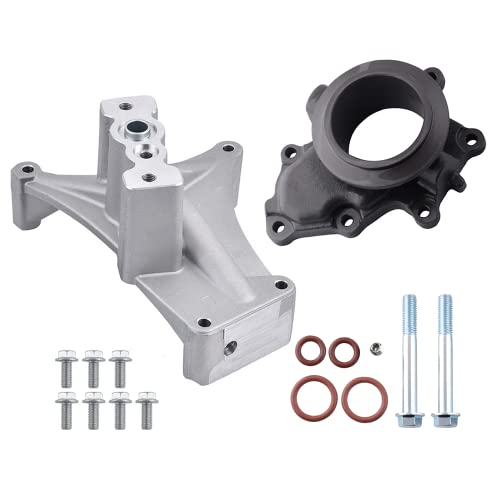
EBP Valve Upgrade Turbo Pedestal & Exhaust Housing Compatible with Ford 7.3L Powerstroke 1999.5-2003 Bolts & Exhaust Housing + Diesel Turbo Pedestal
148 owner reviews
SPELAB EBP Valve Upgrade Turbo Pedestal & Exhaust Housing Compatible with Ford 7.3L Powerstroke 1999.5-2003 Bolts & Exhaust Housing + Diesel Turbo Pedestal. Turbocharger hardware for the Power Stroke — restore lost boost or add drop-in and compound turbo power.
- Restores lost boost
- Drop-in & upgrade options
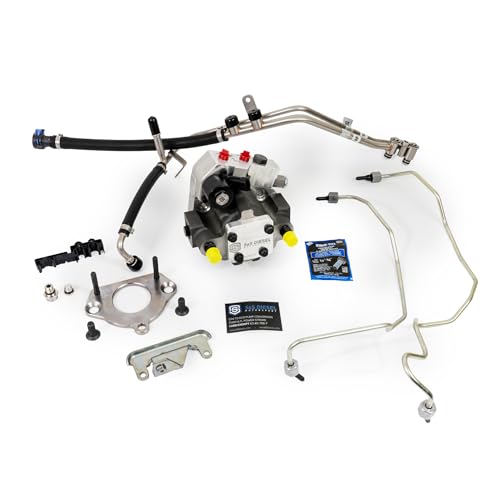
S&S Diesel Motorsport® CP4 to DCR Pump Conversion Compatible with 2011+ Ford 6.7 Powerstroke Diesel (6.7F-DCR-1)
192 owner reviews
S&S Diesel Motorsport® CP4 to DCR Pump Conversion Compatible with 2011+ Ford 6.7 Powerstroke Diesel (6.7F-DCR-1). Fuel-system hardware to keep the Power Stroke fed reliably at stock and elevated power.
- Reliable fuel delivery
- Supports higher power

Doc's Diesel Fuel Filter, Fits 6.7L Powerstroke Ford F-250 F-350 2011-2016 | Independent Testing Rates It At 98.84 Percent Efficiency Down To 3 Microns
330 owner reviews
Doc's Diesel Fuel Filter DFD4615 | Compatible with Ford 6.7L Powerstroke F250, F350, F450, F550 2011-2016 | Replaces FD4615. Fuel-system hardware to keep the Power Stroke fed reliably at stock and elevated power.
- Reliable fuel delivery
- Supports higher power

CCV Filter Engine Crankcase Vent Valve Air Oil Separator Assembly | Compatible with Ford F250 F350 Super Duty 2023-2024 & 2011+ 6.7L Powerstroke Diesel Engine, Replace# PC3Z-6A785-A, PC3Z6A785A
119 owner reviews
Air Oil Separator Assembly Fit for Ford F250 F350 Super Duty 2023-2024 OR 2011+ 6.7L Powerstroke Diesel - PCV CCV Filter Vent Valve Engine Crankcase - Replace PC3Z-6A785-A, PC3Z6A785A. A quality upgrade or replacement part for your Ford Power Stroke diesel.
- Fits Ford Power Stroke
- Quality build
Frequently Asked Questions
How do I know which Power Stroke engine my Super Duty has?
Are Super Duty diesel parts interchangeable between generations?
Which Power Stroke generation is the most reliable?
What year did the Super Duty body change?
Keep going
Shop the parts in this guide
- Injectors for the Power Stroke Fuel injectors, injector sets, and injector hardware for the 7.3, 6.0, and 6.7 Power Stroke — stock replacements through high-flow performance injectors for higher horsepower diesel builds.
- Tuners & Programmers for the Power Stroke Diesel tuners, programmers, and monitors that unlock power, improve towing, and read live data on the 7.3, 6.0, and 6.7 Power Stroke.
- Parts & Accessories for the Power Stroke General Power Stroke diesel parts and accessories — the catch-all for everything that doesn't fit a single system.
Related reading
- Power Stroke injectors: HEUI vs common-rail, symptoms & fitment
- Test before you buy: injector diagnosis, buzz test & balance rates
- 6.7 Power Stroke CP4.2 failure & prevention
- Tuner & programmer buyer's guide: canned vs. custom, safety & fitment
- Best Power Stroke performance upgrades, ranked
- Power Stroke maintenance schedule & parts checklist