How to Tell If a Power Stroke Injector Is Bad: Testing & Diagnosis Before You Buy (7.3 / 6.0 / 6.4 / 6.7)
A step-by-step Power Stroke injector diagnosis reference — the cheap failures that mimic a bad injector, buzz tests and cylinder contribution/balance rates, HEUI oil-pressure checks, common-rail return-flow tests, and the DTCs that matter. Test first, then buy.
Parts Covered in This Guide — At a Glance
Ford Power Stroke owners
Ford Power Stroke owners
Reliable fueling at stock or elevated power
Ford Power Stroke owners
Reliable fueling at stock or elevated power
| # | Product | Owner Reviews | Availability | Best For | |
|---|---|---|---|---|---|
| 1 | 89 | $18.99 In Stock at Amazon | Ford Power Stroke owners | ||
| 2 | 119 | $139.98 In Stock at Amazon | Ford Power Stroke owners | Buy on Amazon
Prime Eligible
| |
| 3 | 168 | $26.90 In Stock at Amazon | Reliable fueling at stock or elevated power | ||
| 4 | 61 | $11.99 In Stock at Amazon | Ford Power Stroke owners | ||
| 5 | 330 | $49.99 In Stock at Amazon | Reliable fueling at stock or elevated power |
Injectors are the most expensive guess you can make on a Power Stroke. A rough idle, a hard start, a dead miss, and a puff of white smoke send owners straight to an eight-injector quote — and a large share of those trucks turn out to have a leaking o-ring, a tired harness, a weak module, or a fuel filter that was due 12,000 miles ago. This page is the diagnosis, not the sales pitch: how to prove an injector is bad before you spend a dollar on one.
If you need the background on how each engine fires its injectors and what fits what, start with the Power Stroke injector reference. Not sure which engine you have? The Super Duty generations & fitment guide sorts it out. Then come back here and test.
First: Which System Are You Diagnosing?
Diagnosis splits down the same line as everything else on these trucks:
- HEUI — 7.3L (1994.5–2003) and 6.0L (2003–2007). High-pressure engine oil fires the injector. That means the entire high-pressure oil system — HPOP, IPR valve, ICP sensor, standpipes, dummy plugs, the 6.0’s STC fitting — is part of the injector circuit. A leak anywhere in it produces injector symptoms.
- Common-rail — 6.4L (2008–2010) and 6.7L (2011+). A high-pressure fuel pump (CP3 on the 6.4, CP4.2 on the 6.7) charges the rail and the injectors are pulsed electrically. Here the injector’s health is measured by return flow, and the pump and filtration are the things that kill them.
Everything below is ordered cheapest-and-most-likely first. Work it in order.
Step 1 — Pull Every Code, and Know What They Mean
Scan the truck before you touch anything, and write down what you find. The codes that matter:
- Cylinder contribution / balance faults:
P0263,P0266,P0269,P0272,P0275,P0278,P0281,P0284— cylinders 1 through 8 in order. These say this cylinder is not pulling its weight. That is a symptom, not a diagnosis: low compression, a leaking valve, a dead glow plug on a cold engine, or a starved fuel supply all set them too. - Injector circuit codes (the
P0261/P0262family and their per-cylinder siblings): the electrical side — driver, wiring, connector, or solenoid. - Rail-pressure codes on the 6.4/6.7, notably
P0087(fuel rail pressure too low): supply, filtration, or high-pressure pump. Chase these first; they are almost never the injector. - ICP/IPR codes on the 7.3/6.0: the high-pressure oil system, which on a HEUI engine is the thing that actually fires the injector.
Never buy injectors off a code alone. A balance code tells you which hole to investigate, and nothing more.
Step 2 — Rule Out the Cheap Failures That Mimic a Bad Injector
This is where most “bad injector” diagnoses actually end.
On every engine
- Fuel filters. An overdue or plugged filter starves the injectors and reproduces every symptom on the list. Change them and re-test — it is the cheapest test on the truck. The fuel filter cross-reference has the correct filter and interval for every engine, and a 24/36 mm filter cap socket makes it a five-minute job.
- Air in the fuel. Cracked lines, a loose filter cap, a bad o-ring on a filter housing — air in the supply makes a diesel run exactly like it has an injector problem. Clear fuel with bubbles in it is a finding.
- Batteries and grounds. These engines crank hard. A weak battery, corroded cable, or bad ground turns into slow cranking and hard starts that get blamed on injectors.
- Glow plugs / cold-start aids. A rough first 30 seconds on a cold morning that smooths out is glow-plug territory, not injectors.
7.3L specifics
- Low-pressure fuel supply. The 7.3 is famous for this: a tired regulator spring, a leaking fuel bowl, and the crossover lines all drop fuel pressure and produce hard start, low power, and a stumbling idle. Test it at the fuel bowl with a 7.3 fuel pressure tester adapter and compare to spec for your year — do not guess. If the regulator is the culprit, the 7.3 blue spring regulator kit is the standard fix, and the 7.3 fuel line seal kit addresses the crossover-line leaks that go with it.
- UVCH (under-valve-cover harness). The single most common cause of a “dead injector” on a 7.3. The connectors cook under the valve cover and go open or intermittent. If a buzz test finds one dead cylinder, check the harness before the injector — they are cheap, and eBay Motors is full of OEM and reman sets.
- IDM (Injector Driver Module). The 7.3’s injector driver can fail and take cylinders or a bank with it.
- ICP sensor and pigtail. Oil wicks up the ICP harness and corrupts the signal, so the PCM sees oil pressure that isn’t there (or misses pressure that is). A false ICP reading will chase you in circles.
6.0L specifics
- FICM voltage. Check this before anything else on a 6.0. A healthy FICM main power output is around 48 volts; hard starting and misfire become common as it sags, and below roughly 45 volts the injectors simply are not being driven properly. A weak FICM is the number-one 6.0 injector impostor.
- Standpipes and dummy plugs. The o-rings on these leak high-pressure oil internally, dropping ICP so the injectors can’t fire — extended cranking, no-start when hot, and a rough run. The 6.0 standpipe & dummy plug kit is an inexpensive, high-payoff fix on 2004.5+ trucks and belongs on the checklist before injectors.
- STC fitting. The snap-to-connect fitting at the high-pressure oil pump on 2004.5–2007 trucks is a known hard-hot-start cause; the updated fitting kit is the repair.
- Stiction. Cold rough idle with white smoke that clears once warm. Sticky spool valves from degraded oil — an oil-quality failure. Get the oil on a strict, correct-spec interval (see the maintenance schedule) and run the right FD-4616 fuel/oil filter before condemning a set.
- Fuel pressure. The 6.0’s regulated-return system drops pressure as the regulator spring tires; the 6.0 blue spring kit restores it.
- The full weak-point order for these trucks lives in the 6.0 Power Stroke problems guide; the 7.3 equivalent is the 7.3 weak points guide.
6.4L / 6.7L specifics
- Filters and water separation first, always. Both engines run dual filters, and both punish a skipped interval. Doc’s DFD4615 covers the 6.7’s frame-rail element.
- On a 6.7, inspect the filters for metal before anything else. Glitter in the filter media is the CP4.2 failure signature. If the pump has come apart, the injectors are downstream victims and replacing them without addressing the pump just feeds the new set the same debris. The 6.7 CP4.2 failure guide covers prevention kits and DCR conversions.
- On a 6.4, don’t read rising oil level as a bad injector by default. The 6.4’s regeneration strategy injects fuel late in the cycle, and fuel dilution of the engine oil is a known trait of the engine itself. Take a sample and look at the whole picture before blaming an injector.
Step 3 — The Electrical Test: Buzz Test
Key-on, engine-off, the scan tool fires each injector solenoid in turn while you listen at the valve cover (or watch the tool’s own pass/fail per cylinder).
What it proves: the driver, wiring, connector, and solenoid on each cylinder are alive and being commanded. What it does not prove: that the injector sprays correctly. An injector can buzz perfectly and still be worn out, stuck, or leaking.
A dead or off-sounding cylinder here is a wiring/connector/solenoid lead — on the 7.3, suspect the UVCH first.
Step 4 — The Running Test: Contribution / Balance Rates
Warm the engine, hold a steady idle, and read the per-cylinder contribution or balance values. The PCM is telling you how much fuel it has to add or subtract on each hole to keep the engine even.
How to read them honestly:
- Compare, don’t chase absolutes. One cylinder far off its seven neighbors is the finding. All eight slightly off usually means a systemic issue — fuel supply, oil pressure, air in the fuel.
- Read it warm and at a stable idle. Cold numbers lie, especially on a HEUI engine.
- Confirm it follows the part. If you can swap the suspect injector to a different cylinder and the outlier moves with it, you have your answer. If the outlier stays put, the problem is the cylinder — compression, a valve, or the harness feeding it.
- Rule out compression. A weak cylinder from a mechanical fault reads like a weak injector. If the numbers don’t add up, test compression before you buy parts.
HEUI: check ICP and IPR at the same time
On a 7.3 or 6.0, watch ICP (injection control pressure) and IPR duty cycle together while cranking and at idle. A 7.3 needs roughly 500 psi of ICP to fire at all — no oil pressure, no start, regardless of injector condition. The tell for a high-pressure oil leak is the IPR working hard (high duty cycle) to hold up a pressure that keeps sagging. That points at standpipes, dummy plugs, the STC fitting, the HPOP, or a leaking injector o-ring — not necessarily the injector itself.
Common-rail: measure return flow
On the 6.4 and 6.7, the definitive injector test is a return-flow (leak-back) test: plumb the correct adapters and graduated containers to each injector’s return, run or crank the engine for a set interval, and compare volumes. A worn injector leaks internally past its control valve and returns dramatically more fuel than a healthy one. Do this only after rail pressure, filtration, and the high-pressure pump have checked out.
Step 5 — Now Decide What to Buy
If, and only if, the testing points at the injectors:
- Replace as a flow-matched set per bank (or all eight). Mixing one fresh injector with seven tired ones usually just relocates the rough-running complaint.
- Renew everything that seals. O-rings on every engine, plus the copper combustion washers on HEUI engines. Reusing them is how a clean job turns into a comeback.
- Fix what killed them. On a 7.3/6.0 that means oil quality and fuel pressure. On a 6.4/6.7 it means filtration — and on a 6.7, CP4 protection, or a new set will meet the same debris.
- Program calibration codes. Common-rail 6.4/6.7 injectors carry a calibration code that has to be entered into the PCM with a capable scan tool after replacement. Skipping this leaves the engine running on numbers that don’t match the hardware.
- Have the right tools. Stuck injectors ruin bores. A pneumatic injector puller kit is the difference between a driveway job and a machine-shop bill.
Where the Parts Come From
- New on Amazon Automotive: the diagnostic tools, filters, seals, standpipe and regulator kits, and pullers in this guide — everything in the injectors, fuel-system and filters & maintenance categories.
- Used, OEM & reman on eBay Motors: the parts that actually turn out to be the fault on a lot of these trucks — 7.3 under-valve-cover harnesses, 6.0 FICMs, ICP sensors and pigtails, STC fitting kits, and the discontinued HEUI injector sets themselves. The rail on this page is split so you land on the right listings.
Chasing an intermittent no-boost complaint too? The down-on-boost diagnosis guide works the same way — test, then buy.
The rule for this whole page: an injector is guilty only when the cheap stuff is proven innocent, the buzz test is clean, the contribution numbers isolate one hole, and the fault follows the part. Anything short of that is an expensive coin flip.
Shopping used or OEM? Try eBay Motors
Live listings for the parts covered in this guide — prices set by the seller.
Recommended Parts for This Guide

7.3L Powerstroke Fuel Pressure Tester Adapter | Compatible for Ford Powerstroke Diesel 7.3
89 owner reviews
Compatible for Ford Powerstroke Diesel 7.3 Fuel Pressure Tester/Adapter. A quality upgrade or replacement part for your Ford Power Stroke diesel.
- Fits Ford Power Stroke
- Quality build

Stand Pipe & Dummy Plug Kit 6.0L Powerstroke 04.5-10 | Xotic Performance | OEM Replacement Kit. Fits Ford F250/F350/F450/F550 6.0L Powerstroke 2004.5-2010. 6E7Z-9A332-B. Fuel Supply Tube. SP100
119 owner reviews
Upgraded Stand Pipe & Dummy Plug Replacement Kit for 2004.5-2010 Ford 6.0L Powerstroke F250/F350/F450/F550 | 6E7Z-9A332-B | Fuel Supply Tube - Xotic Performance™ SP100. A quality upgrade or replacement part for your Ford Power Stroke diesel.
- Fits Ford Power Stroke
- Quality build

03-07 Ford FD-4616 Motorcraft 6.0L Powerstroke Diesel Oil Fuel Filter
168 owner reviews
03-07 Ford FD-4616 Motorcraft 6.0L Powerstroke Diesel Oil Fuel Filter. Fuel-system hardware to keep the Power Stroke fed reliably at stock and elevated power.
- Reliable fuel delivery
- Supports higher power

Fuel Pressure Regulator Blue Spring Kit Compatible with Ford 7.3L Powerstroke Diesel 1999-2003
61 owner reviews
Fuel Pressure Regulator Blue Spring Kit Compatible with Ford 7.3L Powerstroke Diesel 1999-2003. A quality upgrade or replacement part for your Ford Power Stroke diesel.
- Fits Ford Power Stroke
- Quality build

Doc's Diesel Fuel Filter, Fits 6.7L Powerstroke Ford F-250 F-350 2011-2016 | Independent Testing Rates It At 98.84 Percent Efficiency Down To 3 Microns
330 owner reviews
Doc's Diesel Fuel Filter DFD4615 | Compatible with Ford 6.7L Powerstroke F250, F350, F450, F550 2011-2016 | Replaces FD4615. Fuel-system hardware to keep the Power Stroke fed reliably at stock and elevated power.
- Reliable fuel delivery
- Supports higher power
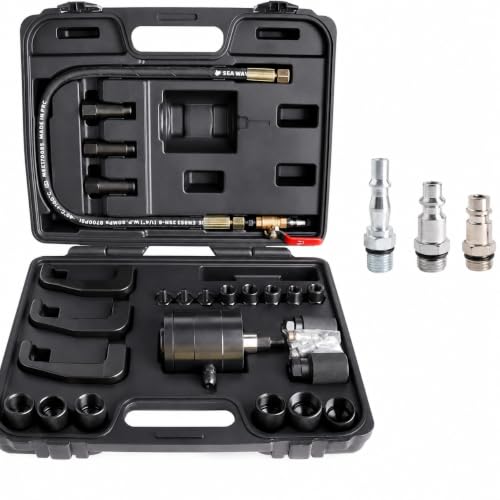
26Pc Pneumatic Injector Puller, Diesel Fuel Injector Removal Tool, Duramax | 5-8 bar pneumatic injector puller with 21 adapters and 3 hooks supports stuck diesel injector removal in shop and fleet work.
13 owner reviews
26Pcs Pneumatic Diesel Injector Puller Kit for Ford 6.7L Powerstroke, Cummins, Duramax, Air Vibration Removal Tool with 21 Adapters & 3 Hooks, Heavy Duty for Bosch Delphi Denso Siemens. Fuel injector hardware for the Power Stroke diesel — restore stock fueling or step up to high-flow injectors for more horsepower.
- Restores stock fueling
- High-flow options for power